
Nearly every time someone shares about missions in a church setting, the stories revolve around projects.
A building was completed.
A program was launched.
A business was opened.
A center was expanded.
And that makes sense.
Projects are easy to talk about because they are visible.
People can picture them.
Support them.
Rally around them.
So over time, projects quietly become the language of missions.
Churches learn to celebrate and fund what they can see.
Missionaries learn to present their ministry in ways that supporters understand.
The next generation of missionaries hears those stories and begins assuming this is what mission work looks like.
Around and around the cycle goes.
And eventually, many of us begin equating the Great Commission with starting and
sustaining projects.
Yet Jesus’ command was remarkably simple:
make disciples who obey Him and help others do the same.
That becomes a problem because projects do not simply sit in the background.
They reshape the daily life of ministry itself.
From Disciple-Maker to Project Manager
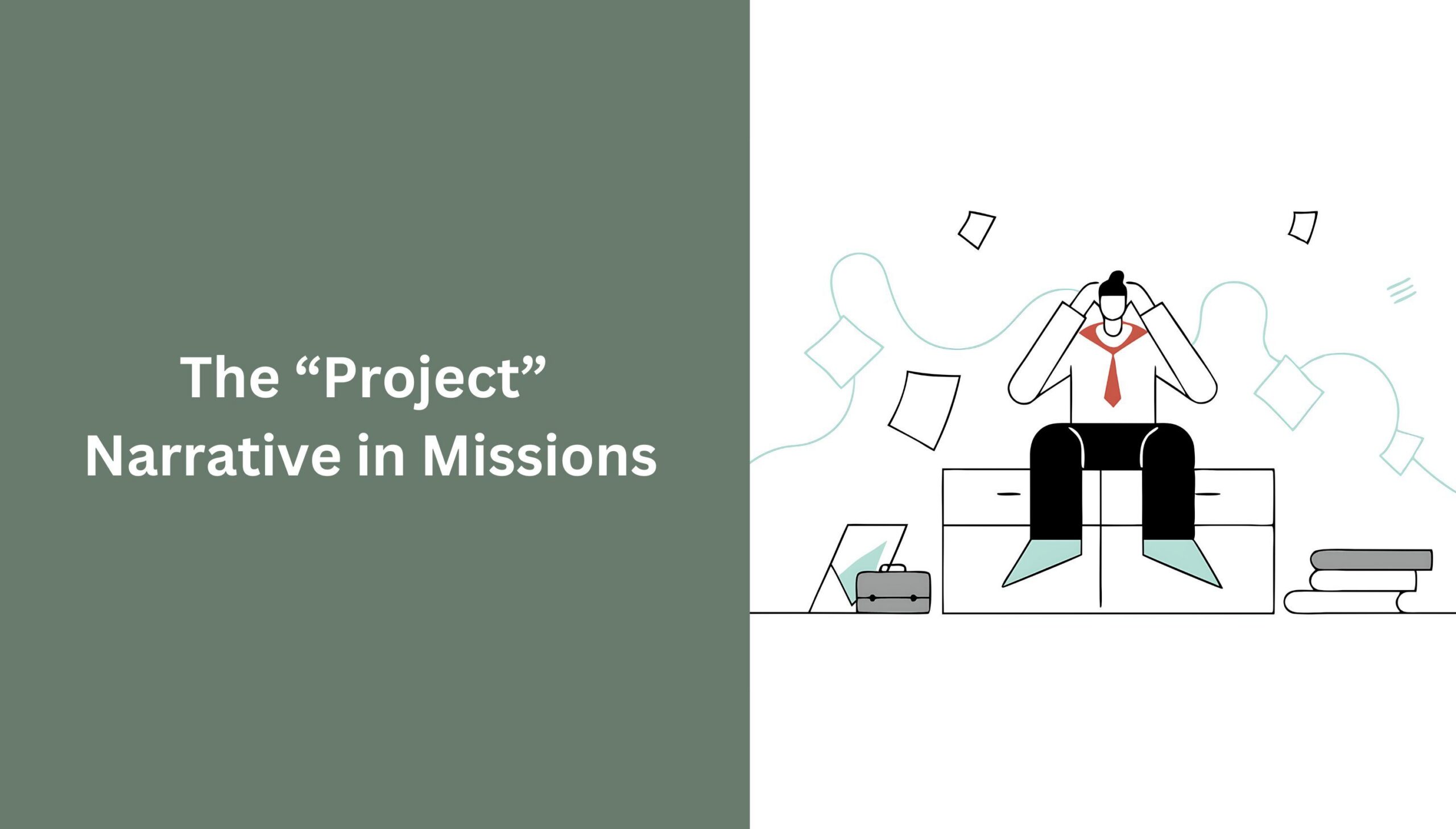
Most missionaries do not leave home dreaming about spreadsheets, maintenance issues, staffing concerns, fundraising updates, and organizational oversight.
They go because they want people to know and follow Jesus.
But projects have momentum.
Once something is built or launched, it must be sustained.
And slowly the missionary’s role changes.
Days once imagined around people begin revolving around responsibilities.
Instead of lingering in homes and relationships, energy gets pulled toward keeping things
functioning.
Not because the missionary stopped loving people.
But because projects constantly demand attention.
And disciple-making rarely thrives in leftover time.
The Inheritance We Leave Behind
The challenge becomes even greater when local believers inherit the systems outsiders created.
What originally looked like help can quietly become a burden.
In some cases, local believers inherit systems they never would have created on their own.
Now someone must maintain the building.
Run the programs.
Manage expectations.
Find resources.
Keep everything operating.
And local believers can end up trapped in the same cycle as the missionary before them:
spending enormous amounts of time sustaining ministry structures rather than building relationships and making disciples within the everyday life of their families, neighborhoods, and communities.
The very thing intended to help local disciple-making can unintentionally crowd it out.
What Begins to Multiply?
Eventually, we must ask an uncomfortable question:
What are we actually reproducing?
Because local believers can usually reproduce:
- shared meals
- prayer
- sharing God’s Word
- hospitality
- conversations
- obedience
- simple gatherings
But projects are much harder to reproduce naturally.
They often depend on outside money, leadership, or systems that ordinary believers cannot easily sustain or reproduce.
So while projects may continue, disciple-making itself often spreads slowly, if at all.
What Did Jesus Leave Behind?
Jesus did not leave behind institutions that required endless management to survive.
He left behind disciples.
People who could enter homes, share life, obey His commands, and pass them on to others.
His ministry moved relationally.
Personally.
Organically.
It spread through ordinary people living ordinary lives under the leadership of the Spirit of God.
A Hard Question
Is it possible that our project-centered approach to missions has slowly trained us to measure
success differently than Jesus did?
Because one approach builds structures.
The other builds people.
And only one multiplies.
Perhaps the question is not what we can build, but what others can reproduce.
Who Can Change the Narrative?
I think it will take all of us working together—the missionary, the church, the donors, and
sending organizations.
But someone has to begin speaking honestly about the unintended consequences of project-
centered missions.
Perhaps missionaries need to help their organizations and supporting churches see how easily
projects can pull us away from the heart of the Great Commission.
Time, energy, and attention slowly drift toward managing systems, sustaining structures, and
meeting organizational demands rather than making disciples in simple, reproducible ways that
can take root in every culture and economic setting.
Perhaps churches also need the courage to reshape the story they celebrate and support.
Missionaries should not have to justify disciple-making by attaching it to visible projects.
The Great Commission itself is enough reason to give.
Helping people make disciples who obey Jesus and help others do the same is not “less than” a
project.
It is the mission Jesus gave us.
Maybe the future of missions looks more like people than projects.
Keep Exploring
Explore trainings and tools from Five Stones Global designed to help you pursue disciple-
making that is simple, relational, reproducible, and able to multiply across cultures and
communities.